Substrate primers for resilient flooring
Two primers, because the substrate decides which one works. GP166 seals absorbent screeds; GP266 bonds to non-absorbent surfaces where a normal primer cannot key.
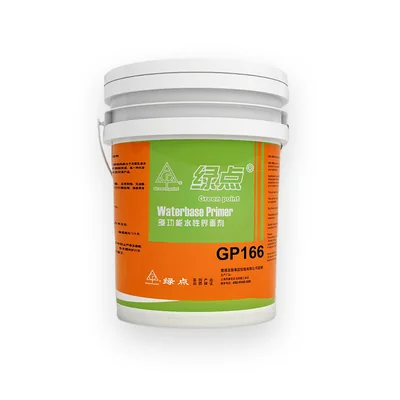 GP166Absorbent substrates
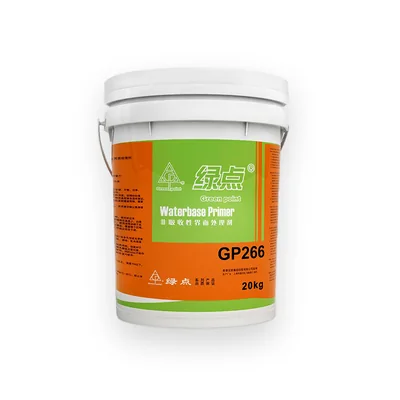 GP266Non-absorbent substrates
| GP166 | Absorbent — cement screed, gypsum, anhydrite, old floors |
|---|---|
| GP266 | Non-absorbent — ceramic tile, terrazzo, sealed or dense surfaces |
GP166 — absorbent substrates
| Type | Water-based acrylic interface sealer |
|---|---|
| Substrates | Cement screed, gypsum, anhydrite, old floors |
| Coverage | ≈110 m² per 20 L barrel (≈5.5 m²/kg theoretical) |
| Drying time | 1–2 h |
| Packaging | 20 L barrel |
GP266 — non-absorbent substrates
| Type | Interface agent for non-absorbent substrates |
|---|---|
| Substrates | Ceramic tile, terrazzo, sealed or dense surfaces |
| Data | Coverage and drying time issued with the datasheet |
A primer that seals by absorption cannot key into ceramic or terrazzo. Using GP166 there is the most common reason a bond fails on renovation work.
Why this matters
Most adhesive failures are not adhesive failures. They start at the substrate — dust, suction, or a surface the primer could not wet. One coat of the right primer is the cheapest step in the system.
Questions we get asked
Is a primer always necessary?
On porous cement and gypsum, yes. Without it the adhesive dries too fast and fails at the interface, not in the adhesive.
Which primer goes on ceramic tile or terrazzo?
GP266. These surfaces do not absorb, so an absorbent-substrate primer has nothing to key into.
How long before spreading adhesive?
1–2 hours, depending on porosity and humidity.
Can it go over an existing vinyl floor?
Yes, after cleaning and scuffing, to prepare for a new layer.
Not sure which primer your substrate needs?
Tell us what the floor is now, and we will tell you what goes on it.